A Designer's Review of the CUTE ANIMALS SET for Embroidery
Let’s get real. As a designer who creates products for clients and my own shop, I see hundreds of digital embroidery files. The promise is often big, but the practical value for actual stitching can be hit or miss. Today, I’m looking at the CUTE ANIMALS SET, Decorative Templates from that exact perspective—how it translates from a digital file to a stitched, finished product that someone will love, buy, or give as a gift.
The First Stitch Impression: Where Does This Design Belong?
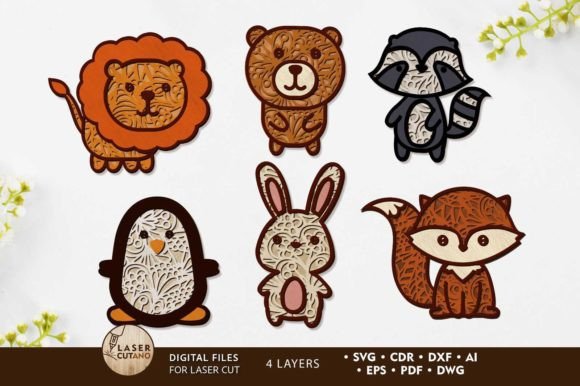
Opening this set, the immediate mood is playful, gentle, and universally charming. The animals aren’t just decorative shapes; they have a cohesive layout and personality that feels designed for affection, not just decoration. This isn’t a aggressive or trendy design; it’s a warm, inviting one. For me, that instantly signals its natural home: items meant for connection. Think a custom embroidered baby blanket, a personalized nursery pillow cover, or a tote bag for a teacher who loves animals. The visual personality leans toward gifts, boutique home goods, and personal keepsakes rather than bold, statement apparel.
Mapping the Design to Real Embroidery Projects
Here’s where I start thinking through my project queue. If I were to use the CUTE ANIMALS SET this week, what would I make? A client request for a set of embroidered kitchen towels as a wedding gift jumps to mind. These designs, with their delightful layouts, would stitch out beautifully on a crisp linen towel, adding a handmade touch that generic store-bought items lack. Similarly, for my Etsy shop, a series of embroidered patches featuring these animals could easily become a bestseller for crafters looking to personalize backpacks or jackets.
The applications are broad, but they have a common thread: the product benefits from a soft, detailed, and heartwarming accent. It would excel on:
- Custom apparel like sweatshirts or t-shirts for children, where the cute factor is key.
- Tote bags and aprons for a boutique, handmade look.
- Pillow covers and nursery decor as part of a coordinated Wall Decor theme.
- Holiday gifts, like a personalized baby’s first Christmas ornament or a cozy blanket.
- Craft fair products where visual appeal and stitching clarity drive immediate sales.
As a digital product seller, this set also serves as a strong design asset for creating printable mockups or previews, helping customers visualize the finished embroidered product.
The Practical Stitching Scenario: A Tote Bag Tale
Let’s walk through a real case. Imagine I’m preparing a custom embroidered tote bag for a small shop’s spring merchandise line. I select an animal from the CUTE ANIMALS SET. My first concern is stitch density and detail level. Cute designs can sometimes be overly complex, leading to dense stitch areas that puff up and distort on bag canvas. I’d hope this set balances detail with clean outlines—likely leaning on satin stitches for borders and fill stitches for larger areas—making it robust for a frequently used item.
The hoop size becomes crucial. Is the design sized appropriately for the center panel of a tote without needing an enormous hoop? I’d need to test that. On a darker fabric, thread color contrast is everything. A design with very thin lines or tiny lettering might lose clarity on a navy or black bag, so I’d plan for a bold, light-colored thread palette.
Where to Exercise Caution
Not every design fits every project. With the CUTE ANIMALS SET, I’d be careful applying it to:
- Very small hoop sizes on items like caps or hats, where curved surfaces and limited space could compress the delightful layouts and lose impact.
- Textured or stretchy fabrics like certain knit sweaters, without the proper stabilizer, as the design’s clarity could warp.
- Items requiring frequent washing, like baby clothes, unless the embroidery file is tested for durability and the stitches are secure.
- Dark fabrics without a thorough mockup in both black and white to ensure the animal shapes remain distinctly charming.
The product description mentions preparation for laser cutting, which suggests clean, defined outlines—a bonus for applique designs or projects where crisp edges matter. But for pure machine embroidery, I’d still verify the file’s suitability for my machine and intended technique.
How This Design Translates to Customer Trust and Product Value
When a customer sees a finished product embroidered with this set, what do they feel? That’s the core of my review. The visual appeal is directly tied to customer trust. A clean, well-stitched cute animal on a pillow cover speaks to care and professionalism. It elevates a simple item into a handmade product with perceived value.
For a craft business, this consistency in quality helps build brand consistency. If I sell a line of baby items all featuring coherent designs from this set, my shop gains recognition. The giftability is high—these designs naturally feel like a personal, thoughtful touch. That drives buyer engagement in online listings and at craft fairs.
The Embroidery Designer’s Final Checklist
Before I ever load this digital embroidery file into my machine for a commercial embroidery project, here’s my practical list:
- Test on scrap fabric first. Always. Use the same material and weight as your final product.
- Review the actual stitch density in the file preview. Does it look appropriate for your fabric?
- Confirm the licensing terms. Can I sell the finished product or use it in personalized gifts for clients? I never assume.
- Check hoop size compatibility. Does the design require a specific hoop that fits my intended item?
- Inspect small details. Are there any intricate corners or elements that might need thread color adjustments for clarity?
- Plan for fabric texture and stabilizer. A tote bag, a tea towel, and a baby blanket all demand different approaches.
The CUTE ANIMALS SET, Decorative Templates has the foundational charm and layout to be a versatile asset in a maker’s toolkit. Its success, however, lies entirely in the thoughtful application—matching its personality to the right project, preparing the stitching environment properly, and ensuring it meets the practical demands of a real embroidery project. When done right, it brings that wonder of the animal kingdom to life not just as a digital layout, but as a tangible, stitched piece of joy in someone’s hands.