Balcony Wall Décor: A Designer's Honest Review
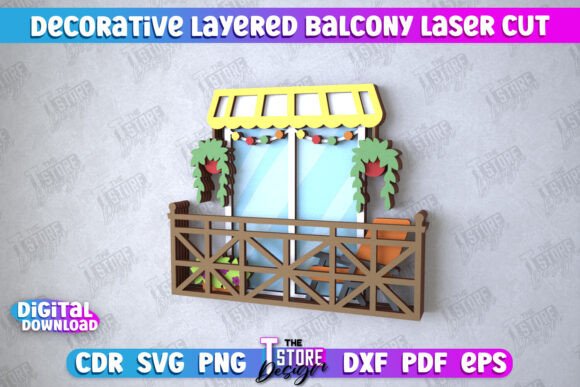
Whenever I evaluate a new embroidery file for real project use, I ask myself one core question: does this design have a story? When I first opened Decorative Layered Balcony Wall Décor, that story was clear. It’s a miniature scene, a tiny architectural vignette that feels nostalgic and serene. The layered balcony, with its suggested door and window, isn't just a shape; it’s a mood. It evokes cottage gardens, quiet mornings, and a handcrafted, almost fairy-tale charm. This isn't a generic logo; it’s a narrative piece.
The First Impression: Where This Design Naturally Belongs
The immediate personality is delicate and decorative. The level of detail suggests it’s meant to be appreciated, not just glanced at. For embroidery designers and makers, this tells me it belongs on projects where the textile itself is a canvas. Think of a beautifully embroidered pillow cover for a boutique home decor line, or a custom tea towel that feels like a special gift. I imagined it stitched onto the corner of a linen blanket or as a focal point on a simple apron for a small creative business. Its aesthetic is soft, feminine, and quietly elegant.
Real-Life Scenario: Crafting a Boutique Baby Gift
Let's walk through a real case. A client requests a personalized gift for a newborn. You want something beyond a name and date. You pull out Decorative Layered Balcony Wall Décor. Stitched in soft past threads onto a muslin baby blanket or the back of a delicate romper, the design becomes a keepsake. It’s not loud or playful; it’s gentle and dreamy. The layered effect, if translated well into satin and fill stitches, would add a lovely depth without being overly bulky for a baby item. This is where the design’s true value shines—it elevates a simple product into a storybook piece.
Performance Across Different Embroidery Projects
Your project choice dramatically affects how this design performs. On a sturdy, flat surface like a tote bag or a pillow cover, it should stitch out with clarity. The defined lines and layered sections would allow for nice color blocking, letting you play with thread choices to enhance the “balcony” feeling. For apparel, like the center of a lightweight sweatshirt, you need to consider fabric texture. A too-textured knit might muddle the finer details.
I would be cautious with caps or curved surfaces. The design likely has some straight lines and corners that could distort on a curved hat base unless carefully hooped and stabilized. Similarly, stitching it small on a shirt pocket might lose the charming detail; it feels like a design that needs a bit of space to breathe. For patches, it could be stunning—a standalone embroidered patch with this motif would be unique and sellable on Etsy or at craft fairs. It has that standalone art-piece quality.
Visual Appeal and Customer Perception
From a small business owner’s perspective, using a design like this affects customer trust and perceived value. It looks intentional and thoughtfully chosen, which reinforces a handmade brand’s consistency. A tea towel embroidered with this, paired with a simple linen napkin set, looks professional and gift-ready. It avoids looking mass-produced. For an apparel decorator, it offers a alternative to trendy graphics—it’s a timeless, decorative accent that could attract customers looking for something softer and more artistic.
Where to Use This Design Carefully
Here’s my practical, real-use advice. This design likely relies on clarity between elements to achieve its layered look.
- Dark Fabrics: Test your thread color contrast thoroughly. Light threads on dark backgrounds will make all the details pop, but on dark fabric, a poorly chosen thread palette could flatten the entire scene.
- Small Hoop Sizes: If you try to shrink it down too much for a tiny item, those engraved detail lines (simulated by fine running stitches or lighter fill densities) might vanish or become muddy.
- Stretchy or Thin Fabrics: A jersey t-shirt or a thin cotton blouse will need excellent stabilizer to prevent puckering, especially if any areas have higher stitch density.
- Products for Frequent Washing: For kitchen towels or aprons that get washed often, consider a robust stabilizer and perhaps even a slightly simplified stitch version to ensure longevity.
Essential Designer Notes Before You Stitch
Never skip these steps. They save time, thread, and client satisfaction.
- Always stitch a test on scrap fabric. Use the exact fabric type and color you plan for the final product. See how the layers separate and how the “engrave” lines translate into stitches.
- Check it in black and white mockups. View the design as a simple silhouette. Does the composition hold up even without color? This tells you if the shape itself is strong.
- Review stitch density in your software. Without specific counts provided, you need to ensure the file isn’t overly dense for your chosen fabric, which could lead to stiff, board-like results.
- Confirm licensing for your use. If you're selling finished products or the digitized file itself, you must verify the commercial license terms. Don't assume.
- Match the design to your product’s purpose. This is a decorative, somewhat delicate wall décor motif. It might not fit a rugged work apron but is perfect for a decorative pillow in a small shop.
The Final Word on Professional Results
In the end, Decorative Layered Balcony Wall Décor is a specialist. It’s not your everyday, run-on-everything logo. Its strength is in creating a specific mood and elevating products that benefit from a touch of narrative embroidery. For creative entrepreneurs selling handmade decor or personalized gifts, it’s a digital asset that can help differentiate your line. For hobbyists making gifts, it offers a beautiful, ready-made scene to stitch. Approach it with an understanding of its personality: delicate, scenic, and best showcased on products where detail can be admired. With proper testing and the right project match, it can stitch out into something truly lovely.