Mystery Secrets: A Design Review for Embroidery Projects
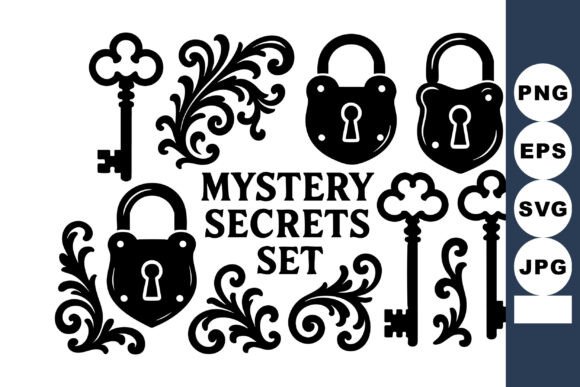
When I first opened the Mystery Secrets with Vintage Keys and Padlocks embroidery file, my immediate thought was how elegantly it solves a common problem for designers: creating a sophisticated, thematic piece without relying on overly complex detail. The black silhouettes of the keys and padlocks, framed by those decorative swirls, create a classic and mysterious mood that isn’t overly dark or cryptic. It feels more like an invitation to curiosity than a statement of gloom. This is a vector design with a clear purpose—its simplicity is its strength, making it a prime candidate for clean, readable stitching.
The Mood Stitched Into Fabric
Imagine applying this design to a custom linen tote bag for a boutique. The mysterious mood translates beautifully into a handmade product, suggesting a sense of history, privacy, or cherished knowledge without being gender-specific or age-limited. That’s a valuable trait. The layout, with the words “mystery secrets” centered among the decorative elements, creates a natural focal point. This isn’t a busy, scattered graphic; it’s a composed illustration that will stitch out with a high degree of visual clarity, enhancing the perceived value of the finished product.
A Natural Fit for Real-World Projects
In practical terms, where does Mystery Secrets belong? Its classic style makes it incredibly versatile. I envision it working exceptionally well on mid-weight fabrics where the silhouette can stand out crisply. A well-executed satin stitch on a cotton sweatshirt would give it a premium, boutique feel. As an embroidered patch on a denim jacket, it becomes a statement piece. On a pillow cover or a kitchen towel, it elevates ordinary home goods into thoughtful gifts. For baby items or nursery decor, it’s probably too thematically mature, but for adult apparel, personalized gifts, and small shop merchandise—especially for Etsy sellers targeting a market that appreciates vintage elegance—it’s a strong contender.
Consider a real-life scenario: preparing a set of custom embroidered caps for a bookstore’s loyalty program. This design, with its thematic link to stories and secrets, would be a perfect match. The keys and padlocks aren’t overly detailed, so translating them into embroidery on the curved surface of a cap should be manageable, provided the stitch density is appropriate.
Performance on the Machine and the Product
How does Mystery Secrets perform in real embroidery situations? The key consideration here is the balance of solid areas (the silhouettes) and finer details (the swirls and lettering). For successful stitching on custom apparel like t-shirts or tote bags, the fill stitches for the keys need to be dense enough to look solid but not so dense that they distort lighter fabrics. The small decorative swirls and the lettering “mystery secrets” will rely on running stitches or lighter fills. On dark fabric, the black design will obviously vanish, so this is exclusively for light or mid-toned backgrounds. On a light grey sweatshirt or a cream-colored apron, it will look stunning.
The design’s elegance directly boosts customer trust and professionalism. A cleanly stitched version on a tea towel or a pillow cover looks intentional and well-made, not like a generic clip-art graphic. This enhances brand consistency for a creative entrepreneur selling a line of vintage-themed goods. For holiday gifts like embroidered blankets or personalized tote bags, it carries a timeless quality that feels more permanent than trendy.
Where Caution is Needed
This is a graphics file that should be used carefully in a few specific contexts. First, very small hoop sizes. If you try to shrink it down for a tiny patch on a baby item, the small lettering and intricate swirls may lose clarity and become a muddle of threads. Second, on highly textured or stretchy fabrics without proper stabilizer, the finer lines could distort. Third, on layered garments like thick hoodies, you need to ensure your machine and needle can handle the potential stitch density of the solid key areas. Always test on scrap fabric first.
The visual appeal hinges on contrast. Always check your thread color against your fabric in a mockup—even a slight off-white thread on white fabric can make the design look faded. I recommend testing it in digital black and white mockups on both light and dark backgrounds to confirm it only works as intended on light ones. This step is crucial before committing to a production run for your craft business.
Practical Notes for the Embroidery Designer
Before running this embroidery file for a client project or your own small shop product, a few practical checks are non-negotiable. Since the product description mentions it’s a downloadable ZIP file, you must confirm the specific file formats and their compatibility with your machine. The description doesn’t list exact stitch counts or hoop sizes, so you need to open the files in your software to review the stitch density, inspect the small details, and confirm the minimum recommended hoop size.
- Test, Test, Test: Stitch it out on a scrap of your target fabric—a canvas for a tote bag, a cotton blend for a sweatshirt—using proper stabilizer. This reveals how the decorative swirls actually translate into stitches.
- Contrast is King: Play with thread colors. While the design is a black silhouette, a dark grey or navy thread on light fabric might soften the mood interestingly.
- Commercial Use: Crucially, confirm the licensing terms before selling finished items or using it in commercial embroidery projects. The product category is Illustrations, and the type is Graphics, but the license for the embroidery file itself dictates your rights.
- Application Wisdom: This design shines on flat, stable surfaces. For curved surfaces like caps, ensure your hooping technique is solid. For products needing frequent washing, like apparel, a tight, dense stitch construction will hold up better.
Ultimately, Mystery Secrets with Vintage Keys and Padlocks offers a straightforward, elegant design asset. Its value lies in its thematic clarity and stitching potential. For embroidery designers and makers looking for a design that communicates a vintage, mysterious mood without technical embroidery headaches, it’s a thoughtful choice. It won’t fit every project, but where it fits—on that custom tote, that boutique pillow, that personalized gift—it will stitch out into a finished product that feels both classic and curiously engaging.