A Professional Review of Cute Bunny Graphics for Illustrations
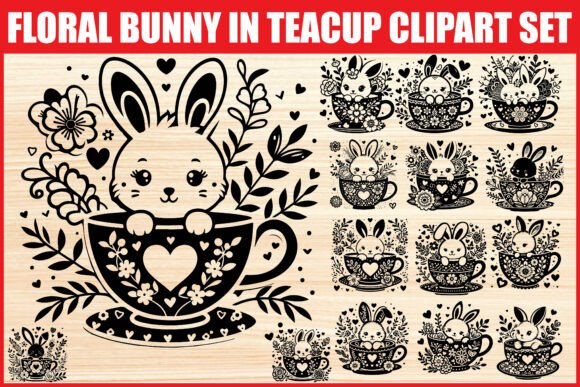
When a new design asset lands on my desk for a potential branding project, my first question is always: can this illustration carry a brand’s story? Today, I’m evaluating the Cute Bunny in Teacup Clipart Set for a real client—a local artisan bakery specializing in floral-infused teas and delicate pastries. My immediate impression is one of gentle charm. This set isn’t bold or modern; it whispers softness, warmth, and a touch of whimsy. The mood is distinctly playful, feminine, and decorative, leaning towards a handmade or organic brand personality. It feels friendly and approachable, perfect for a business that wants to evoke comfort and care.
The Mood and Business Fit of Teacup Bunny Graphics
The illustrations suggest a brand that values storytelling and emotional connection. This asset wouldn’t suit a stark, minimalist luxury brand, but for businesses built on personal touch—like a boutique florist, a children’s product line, a handmade soap company, or my client’s bakery—it could be a cornerstone. The kawaii bunny elements paired with floral details naturally align with spring campaigns, seasonal product launches, or any brand celebrating gentleness and nature. It creates an immediate sense of polished whimsy, which is a powerful tool for customer trust in crowded marketplaces like food or skincare.
Real-World Applications for Local Business Branding
For my bakery project, I see multiple uses. The primary application will be product packaging design. A single bunny illustration could become the hero graphic on a tea blend label, while a simpler version might accent the packaging for a bunny-shaped cookie. The vector editability of the SVG files means I can adjust colors to match the brand’s palette—perhaps a soft sage green for the leaves—ensuring a consistent brand identity. Beyond labels, these graphics can elevate thank-you cards, store window posters, and social media graphics announcing a new spring menu. For a candle brand or home decor shop, the same asset could be used on hang tags and website banners, creating a cohesive visual thread from the shelf to the screen.
Strengthening Business Presentation with Decorative Elements
Used strategically, this clipart set directly supports better product recognition and a stronger first impression. On a shelf alongside other artisan products, a package featuring this unique bunny design will stand out. It provides a clear visual hierarchy—the bunny becomes the focal point, around which product name and details can be organized. This leads to more professional packaging, which customers often equate with quality. For marketing, using the same illustrations across flyers, business cards, and social media campaign graphics creates a memorable and trustworthy brand image. It’s not just decoration; it’s a tool for building an emotional connection with a local audience.
Optimal Use Cases for Maximum Impact
This asset works best as a decorative brand element rather than a literal logo. I’d use it prominently on product labels with ample space, as a central graphic on promotional banners for a seasonal sale, or within product mockups for an online store. The PNG files with transparency are ideal for layering over photos for social media content. For a boutique, it could adorn price lists or menu graphics, adding a cohesive touch. The key is to let it be the visual storyteller without overcrowding the necessary business information.
Practical Considerations and Designer Notes
However, a brand designer must always proceed with care. This style should be avoided in formal corporate branding or on very small labels where detail gets lost. It shouldn’t be placed on crowded product packaging or in legal information areas where decoration competes with critical text. On a low-contrast background, the softer lines might vanish. My process involves several checks: I test it on real packaging mockups at actual print size, preview it on small labels to ensure clarity, and compare it with competitor packaging to gauge its unique appeal. I always review print quality by examining the high-resolution files and inspect SVG editability to confirm I can adapt it for the client.
Font pairing is crucial. I test the bunny graphics beside a script font for a handmade feel, a clean sans serif font for a modern twist, and even a serif font to see if it can support a more elegant tone. Most importantly, before any client work, I confirm commercial licensing. Using a graphic design asset for physical product sales and business branding requires a clear commercial license, which is a non-negotiable step for professional practice.
Final Thoughts on Asset Integration
In conclusion, the Cute Bunny in Teacup Clipart Set is a specialized tool. It won’t fit every project, but for the right local business—one built on charm, care, and a personal touch—it can be transformative. It allows a small business owner to present a polished and consistent visual identity across packaging, promotional materials, and digital touchpoints. By integrating it thoughtfully, focusing on visual hierarchy, and respecting its decorative nature, a brand designer can leverage this illustration to help a client tell their unique story, connect with their community, and stand out in a tangible, beautiful way.